Freepik Review
Are you searching for the perfect image or illustration to add to your project? Perhaps you want to utilize leading …
The post Freepik Review appeared first on .
Latest B2B whitepaper | Tech Trends
Are you searching for the perfect image or illustration to add to your project? Perhaps you want to utilize leading …
The post Freepik Review appeared first on .
Our recommendation for the best local SEO tool is Semrush Listing Management. For QuickSprout visitors, Semrush is offering a 14-day …
Compare the Best Local SEO Tools Read More »
The post Compare the Best Local SEO Tools appeared first on .

The modern workforce is in the midst of an evolution.
Today’s professionals are redefining their traditional relationships with work and, as a result, rethinking what they want from the organizations they work for.
Influenced by a diverse array of societal shifts and economic transformations, today’s professionals are seeking much more than just a paycheck from their employers.
And that means understanding and adapting to these changes is essential for organizations to remain competitive when it comes to attracting and retaining A-player talent.
In this article, we’ll explain 14 factors that help make companies truly attractive to employees in today’s professional landscape.

In order to understand what exactly employees look for in an employer today, it’s important to first understand why their preferences have shifted.
The rise of remote work, advancements in technology, and the lingering impacts of the global pandemic have ushered in an era where flexibility, work-life balance, and meaningful work have become more important than ever.
Society’s increased focus on social consciousness also means that employees are now looking for organizations that align with their personal values and ethics.
So, unlike in past decades, today’s employees want to work for organizations that not only support their professional and personal growth but are also committed to making a positive impact on society and the environment.

In the previous section, we painted in broad strokes about shifting employee preferences. But as a business leader, where should you focus your efforts when it comes to making your organization as appealing as possible to today’s employees?
Here are 14 ideas for where to start.
Today’s employees want more than just competitive salaries—but that doesn’t mean this isn’t still critically important.
Organizations that offer high-paying roles attract top-tier employees who know their worth in the marketplace.
So, it’s important that your organization does too.
In a traditional employee benefits package, you’d expect to see things like health insurance, retirement plans, and paid time off.
You can provide extra value to your employees by offering additional benefits that truly align with their lives.
During the pandemic, many parents grew accustomed to the convenience and cost-savings of being at home with their kids. Now, as people return to in-office work, you can ease this stress with incentives focused on childcare.
While most organizations can’t provide daycare in their workspace, you can support your staff with complimentary access to nearby daycare centers or by helping to subsidize their childcare costs.
During the pandemic, 25 million households in the United States added a dog to their family. For context, that’s nearly one in every five homes in America.
And now, these new pet owners are struggling with how to handle care for their dogs while working full-time jobs.
If you’ve got pet owners on your team, you can offer them things like:
While this won’t necessarily benefit everyone in your company, it’ll go a long way for many of them. It’ll also act as an attractive benefit for potential future hires.
Research has shown that 79% of employees feel eliminating their commute was a big plus of remote work—and this is no surprise when you consider it saves them an average of 72 minutes each day.
You can consider offering your employees commuting benefits like:
These are just a few options. The key is to understand exactly what resonates with your employees and aligns with your brand.

The pandemic gave employees a taste of professional freedom, allowing them to prioritize autonomy and balance more easily in their lives. For employers, mandated remote work demonstrated that employees could still deliver outstanding results, even when they weren’t in the office.
And, as a result, flexible work arrangements have become incredibly important for employees.
Here are a few ways you can incorporate it in your organization.
Flexibility in working hours allows employees to manage their work around personal commitments, rather than the traditional 9-to-5 schedule.
This may include options such as compressed workweeks, flextime (where employees can start and finish their workdays at varying times), or job sharing.
By accommodating various life demands like childcare, education, or hobbies, flexible schedules can enhance employee satisfaction and productivity.
The ability to work from anywhere has become increasingly important to employees.
This flexibility not only eliminates commute times but also allows them to create a comfortable work environment tailored to their personal needs.
For many, the ability to work remotely at least part of the time has become a non-negotiable aspect of job offers.
Hybrid models, where employees split their time between working remotely and working in the office, have emerged as a popular compromise between traditional and fully remote working setups.
These models can offer the best of both worlds: the collaboration and socialization benefits of in-office work, and the flexibility and autonomy of remote work.
In a recent survey, 92% of employees indicated that having access to professional development is important or very important.
And in order to facilitate these opportunities, it’s important that employees have access to senior leaders within your business and that your organization has a strong employee development program in place.
To learn more about how to do this, check out our resource: Employee Development Explained: 5 Ways to Improve Your Processes and Create Stronger Teams.
Unlike past generations, today’s younger professionals have no problem leaving their current jobs in search of advancement opportunities with other organizations.
In fact, a 2022 survey by McKinsey found that 40% of workers were considering leaving their jobs due to a lack of career advancement potential.
So, it stands to reason that creating—and communicating—clear pathways for career progression and the opportunity for upward mobility can attract ambitious, top-tier employees—and keep them at your organization.
Today, 49% of Americans believe it’s more important for companies to make the world a better place than it is to generate money for shareholders.
That’s why modern employees are attracted to companies that:
This can include initiatives like:
Your organization can incorporate this on a macro level, but individual departments and teams can also do it with micro initiatives, like charitable team building activities.
Here are a few you can try.
You can do some good in the world without it costing your company a dime—all it takes is some time and a little team spirit.
Consider heading out into your community—whether to a city, park, or beach—and doing a cleanup.
Pick up trash, collect recycling, and spend the day tidying up the local public amenities that everyone enjoys.
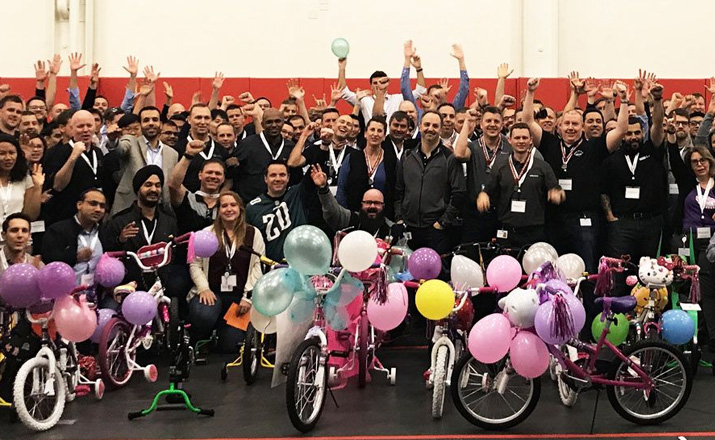
Want a way to give back while helping your team hone valuable business skills at the same time? Then you’ll love this.
With Charity Bike Buildathon, your workgroup will split into teams to build, decorate, and put together an advertising campaign for children’s bicycles.
After each group has presented their bike, you get to donate them all to a charity of your choice!

Philanthropy isn’t always about donating money or goods. Sometimes, it can just be about spreading some cheer and goodwill.
Random Acts of Kindness fuses the scavenger hunt concept with a philanthropic twist. This team building activity gets teams racing against one another to try and complete as many good deeds as possible before time runs out.
As an organization, you’ve got a ton of connections—and so do your employees. If you’re up for a bigger project, hosting a food or toy drive can be a great way to make a difference for those in need.
It’s not a complicated process to put one together, it just requires a little bit of planning.
Here’s how to approach it:
Having your team work together to host the drive is also a valuable exercise in event planning, so your charitable initiative also has a team building and business-benefitting aspect.
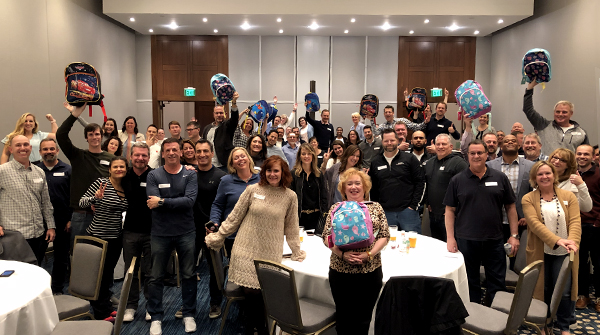
Class is in session with this philanthropic activity where your team will be tested by a variety of education-themed teamwork challenges, share a special bonding experience, and support local children in need by competing to fill backpacks with school supplies and donating them to charity.
At Outback Team Building and Training, we recognize the value of helping organizations make a difference, and that’s why every one of our team building activities can be amplified with a charitable care kit component.
For even more ideas for how your company can give back, check out our list of charitable team building activities for workgroups.
A positive, inclusive, and supportive culture that aligns with an employee’s values can make an organization more attractive.
And there’s no one-size-fits-all formula for creating a great company culture.
But in order to provide you with some inspiration for how to improve the culture within your organization, we recommend you read through our resource where we asked six business leaders to share their definitions of company culture—along with real-world examples.
In our always-connected digital age, maintaining a healthy work-life balance has become a crucial aspect of overall well-being.
Employees increasingly seek organizations that understand the importance of balancing personal life with work demands.
This might involve flexible working hours, remote or hybrid work options, generous vacation policies, and respect for personal time outside of work hours.
Companies that promote a healthy work-life balance are viewed as caring for their employees’ well-being, leading to higher job satisfaction and reduced burnout.

High-performing employees value recognition of their hard work and achievements.
This recognition can be in the form of public acknowledgment, performance bonuses, promotions, or even simple thank-you notes.
An effective reward system not only boosts employee morale but also encourages continued high performance and increases employee retention.
For more insights into how to put this into practice, read through our online guide focused on why employee recognition matters and how you can provide it.
Employees are attracted to roles that offer them a sense of purpose and allow them to make a difference. Meaningful work can boost motivation, productivity, and job satisfaction. This is particularly true for top-tier employees, who are often driven by impact and purpose more than just salary.
Today’s employees are no longer satisfied with simply going to work and punching a clock. They want more than just a job—they want purpose.
Organizations whose mission aligns with their employees’ personal values and beliefs are more likely to attract and retain these individuals.
So, it’s essential to proactively communicate your organization’s mission, vision, and values and to demonstrate how the efforts of individual employees, teams, and departments help make them a reality.
Research from Glassdoor has shown that 67% of job seekers consider workplace diversity an important factor when considering employment opportunities, and more than 50% of current employees want their workplace to do more to increase diversity.
But there’s an important distinction to make when it comes to diversity and inclusivity.
In some regards, the concept of diversity in the workplace pertains more to a quantifiable metric. On the other hand, inclusivity pertains to the way people feel when they work in your organization.
That’s why creating an inclusive workplace environment should be the key focus for your organization.
This means not only welcoming diversity but also actively working to ensure equal opportunities and inclusivity in your company’s practices, policies, and culture.

Open and transparent communication from leadership about your company’s strategies, challenges, and successes is valued highly by top-tier employees.
It fosters a culture of trust, encourages employee participation, and gives employees a sense of ownership and belonging in the organization.
Now more than ever, employees value the freedom to make decisions and have control over their work.
Empowering your employees can enhance their job satisfaction, increase their sense of ownership, and drive innovation. It demonstrates trust in the employees’ abilities and can be a significant factor in attracting and retaining high-performing individuals.
People are becoming increasingly conscious of their well-being, and they expect their organizations to support it.
This can include their physical health and well-being, such as:
But it can also extend to things like financial wellness and guidance.
Companies that invest in their employees’ well-being show that they care about their staff as individuals, which can lead to higher job satisfaction and loyalty.
In today’s rapidly evolving professional landscape, organizations must recognize that the expectations of modern employees have moved beyond just financial compensation and benefits.
This transformation of the modern workforce is not a fleeting trend but rather an ongoing evolution.
And, in order for your organization to remain competitive in attracting and retaining top talent, it’s essential to align your business accordingly.
What is your organization doing to remain attractive to employees in 2023? Let us know in the comments section below!
If you’ve got questions about how team building and group skills training sessions can help ensure your company appeals to today’s employees, reach out to an Employee Engagement Consultant.
14 Factors That Make Organizations Attractive to Employees in 2023
Highlights:
Nvidia Corporation is adding new software features and a high-performance computing platform that scientists can use to speed up their research.
The updates were scheduled to debut at the Supercomputing 2022 event. During SC22, Nvidia will also detail its collaboration with Lockheed Martin Corporation to develop a system for displaying geophysical information, such as readings of sea temperature measurements.
Digital twin collaboration
The National Oceanic and Atmospheric Administration of the United States has chosen Nvidia and Lockheed Martin to construct a new computing system known as the Earth Observation Digital Twin or EODT. The system will be able to process multiple types of geophysical data, including sea temperature measurements and solar wind data. Climate and weather visualizations will be created using these data to support research initiatives.
EOTD will operate on cloud instances from Amazon Web Services Inc. equipped with graphics processing units. In addition, it will perform some computing tasks using systems from the DGX and OVX data center appliance product lines by Nvidia. The appliances include GPUs optimized for artificial intelligence applications and other workloads.
According to Nvidia, the system’s software architecture consists of multiple components.
The OpenRosetta3D application from Lockheed Martin will collect the geophysics data that EOTD will process. Once collected, the data will be processed into the Omniverse Nucleus database. Another system component is Lockheed Martin’s Agatha software tool, which makes it easier for researchers to interact with geophysics data gathered from multiple sources.
The first demonstration of EOTD’s capabilities is scheduled for September next year. According to Nvidia, the initial prototype of the system will be created to display data regarding the sea surface temperature.
New edge platform
Nvidia also intends to unveil several new product enhancements during SC22. The first feature is a platform that will facilitate the transfer of scientific data across geographically distant computers and other systems.
There are several circumstances in which researchers must be able to transmit data over extensive distances. For instance, a university may desire to share measurements from research equipment in one facility with a supercomputer hosted on another facility. Similarly, researchers may want to communicate simulation findings with many supercomputers operating in separate locations.
Senior Product Manager Geetika Gupta stated, “To overcome this problem, Nvidia has introduced a high-performance computing platform that combines edge computing and AI to capture and consolidate streaming data from scientific edge instruments and then allow devices to talk to each other over long distances.”
The platform is based on three Nvidia chip technologies: MetroX-3, Holoscan, and BlueField-3.
MetroX-3 is a soon-to-be-introduced technology that can significantly expand the reach of a data center network. With this technology, a data center can connect to IT infrastructure over 25 miles away. Researchers can transfer scientific data between servers located in different facilities using MetroX-3 network links.
The new platform from Nvidia also includes Holoscan and BlueField-3 chips. Researchers may utilize Holoscan to process data from medical devices. BlueField-3 chips from Nvidia are specialized processors optimized for network traffic coordination between servers.
Software upgrades
Omniverse is a software development platform offered by Nvidia to create digital twins and simulations. Recently at SC22, Nvidia was scheduled to unveil an update to Omniverse that makes it easier for scientists to use the platform for research projects.
Omniverse can now execute batch workloads on systems powered by Nvidia’s H100 and A100 graphics cards in data centers. Batch workloads are applications, such as physics simulators, that do not require user input to perform calculations.
As part of the update, Nvidia is also integrating popular scientific applications into Omniverse. The applications include the scientific data visualization tools ParaView, IndeX, and NeuralVDB. Modulus, a software tool for building neural networks that automatically perform physics calculations, is now compatible with Omniverse.
One of the areas in which the company’s GPUs are used to support research initiatives is quantum computing. To facilitate the work of scientists, Nvidia is releasing two new features dedicated to quantum computing.
The first functionality is being rolled out for the CUDA Toolkit of the firm. This is a collection of software components for developing apps compatible with Nvidia graphics cards. The purpose of the new functionality is to enhance the performance of scientific apps that do quantum mechanical computations.
Nvidia is concurrently improving its cuQuantum framework. Researchers utilize the architecture to mimic quantum computers on conventional computing gear. cuQuantum now enables the simulation of quantum computers with up to tens of thousands of qubits due to the upgrade introduced.